Create more privacy
Mark the views you want to screen and the places you want to feel more enclosed. Begin with solid wood or vinyl layouts, then compare their board or panel details.
Wood · Aluminum · Vinyl · Chain link
More privacy, an open view or a better place for the dog. Compare four fence materials, explore real photographs and choose the styles that fit the way you use your property.
Local. Veteran owned. Free estimates.
Start with what matters
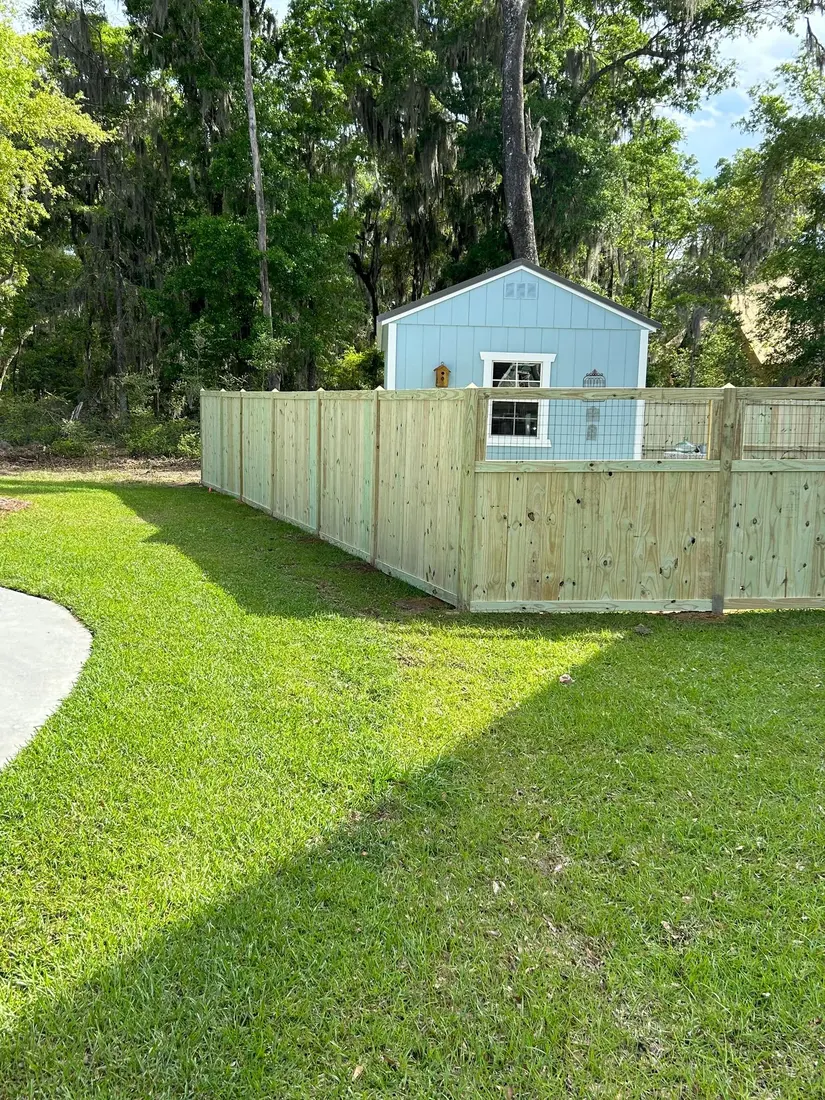
Mark the views you want to screen and the places you want to feel more enclosed. Begin with solid wood or vinyl layouts, then compare their board or panel details.
Define the yard without choosing a solid screen. Compare open-picket aluminum, chain link or a rail layout around the views and access you want to preserve.
Start with your pet’s behavior and the whole enclosure. Material, height, ground clearance, openings and latches all belong in the conversation.
Place walk gates, mower openings and larger access points before finalizing the fence line. A beautiful fence still needs to be easy to move through.
Natural character. Your choice of detail.
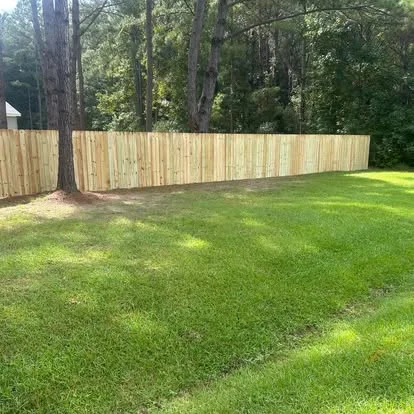
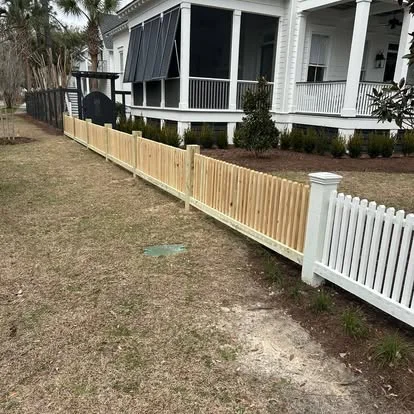
Choose wood when the board pattern, top line and finishing details are part of the look you want. A solid backyard screen, an open picket boundary and a rail-and-wire enclosure start with the same broad material category, but create very different spaces.
Best starting point when you want to discuss privacy, a natural-looking boundary or custom wood detailing.
Compare a continuous board layout with overlapping or alternating boards. Look from the patio and from an angle, not only straight at a sample panel.
Cap and trim, horizontal boards, picket profiles and gate details can change the character of the boundary. Identify the details that matter most before asking for a price.
Carry the chosen pattern across a walk gate or larger opening. Framing, supports, hinges and latches belong in the same conversation as the visible boards.
Decide which faces receive trim and whether a natural appearance, stain or paint is part of the scope. Ask about the lumber, posts, rails and fasteners rather than comparing board appearance alone. For an existing fence, review the condition of retained sections and how new materials will look beside weathered wood.
Styles to explore: Stockade, board-on-board, cap-and-trim, shadowbox, horizontal, picket and post-and-rail designs.
Define the yard. Keep the view open.
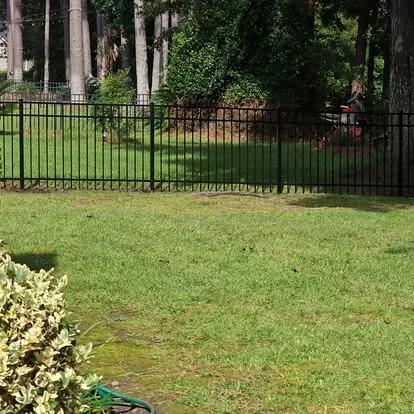
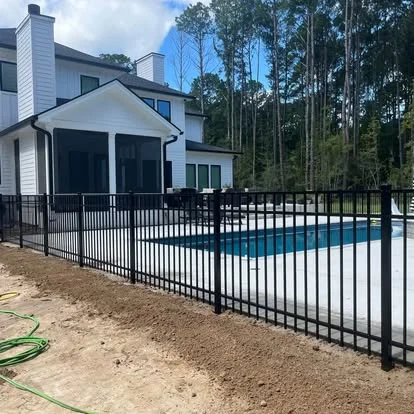
Start with aluminum when you want an open-picket look rather than a solid visual screen. Think about how the panel profile frames the yard, where the gate belongs and what the fence needs to contain before selecting a rail arrangement.
Best starting point when keeping views open is more important than creating a solid privacy screen.
Compare two-rail, three-rail and ornamental top profiles around the landscape you want to keep in view. The style should fit both the house and the purpose of the enclosure.
If the project is around a pool, say so at the start. Review the whole barrier, doors, gates and hardware against the applicable requirements rather than assuming any attractive panel is suitable.
Discuss the selected picket spacing, ground clearance and gate openings for the actual pet or access need. Additional lower pickets are an option to evaluate, not a universal containment guarantee.
Specify the actual panel system, posts, finish and compatible gates. Ask how the selected layout handles changes in grade and what gaps remain beneath it. Care guidance and any product coverage should come from the selected system rather than a blanket promise about every metal fence.
Styles to explore: Two-rail and three-rail flat tops, puppy-picket layouts and spear-top profiles.
Open metal layouts from Beaufort Fence’s portfolio; the product and material for new work are specified separately.
A coordinated look from panels to gates.
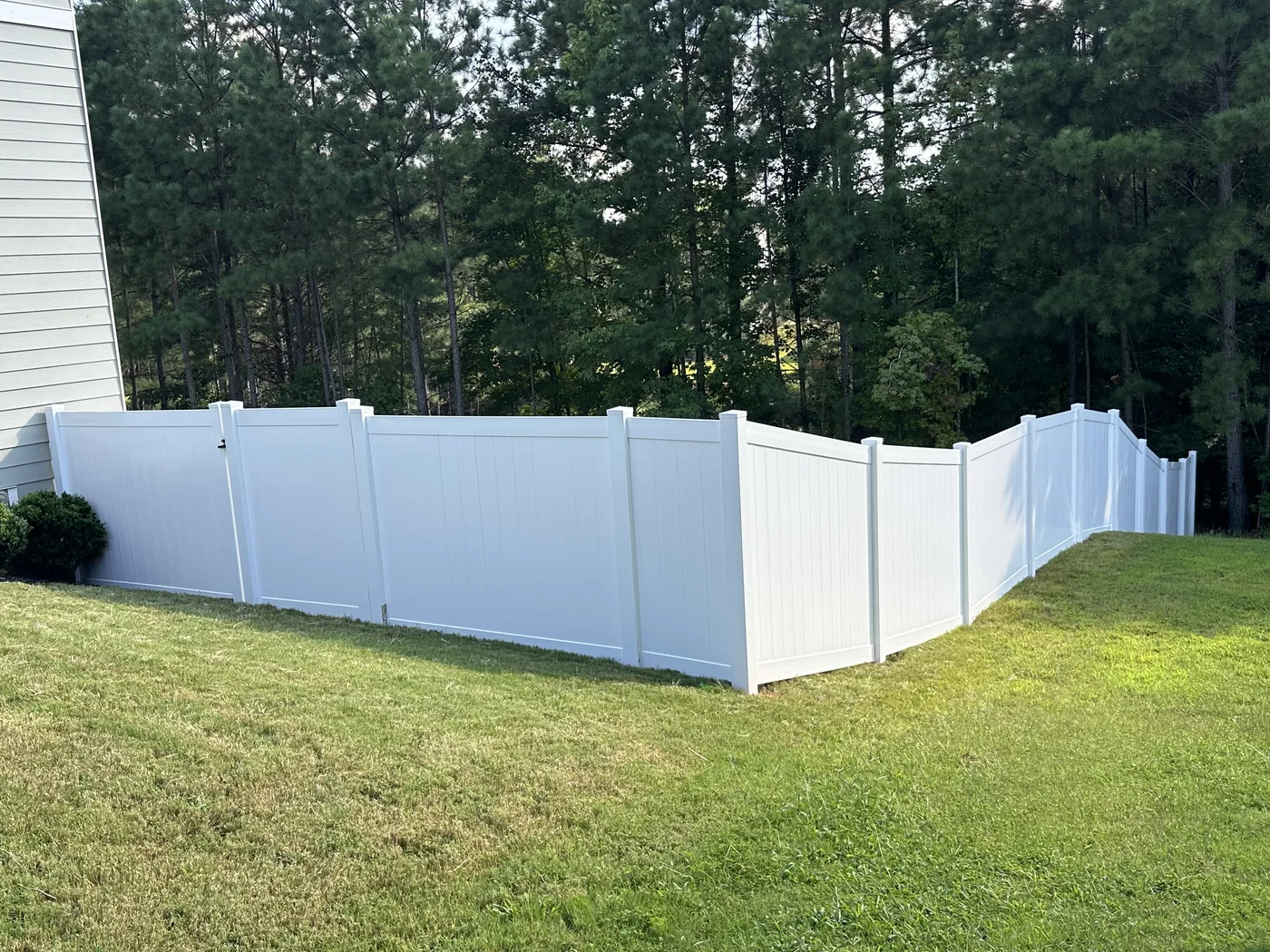
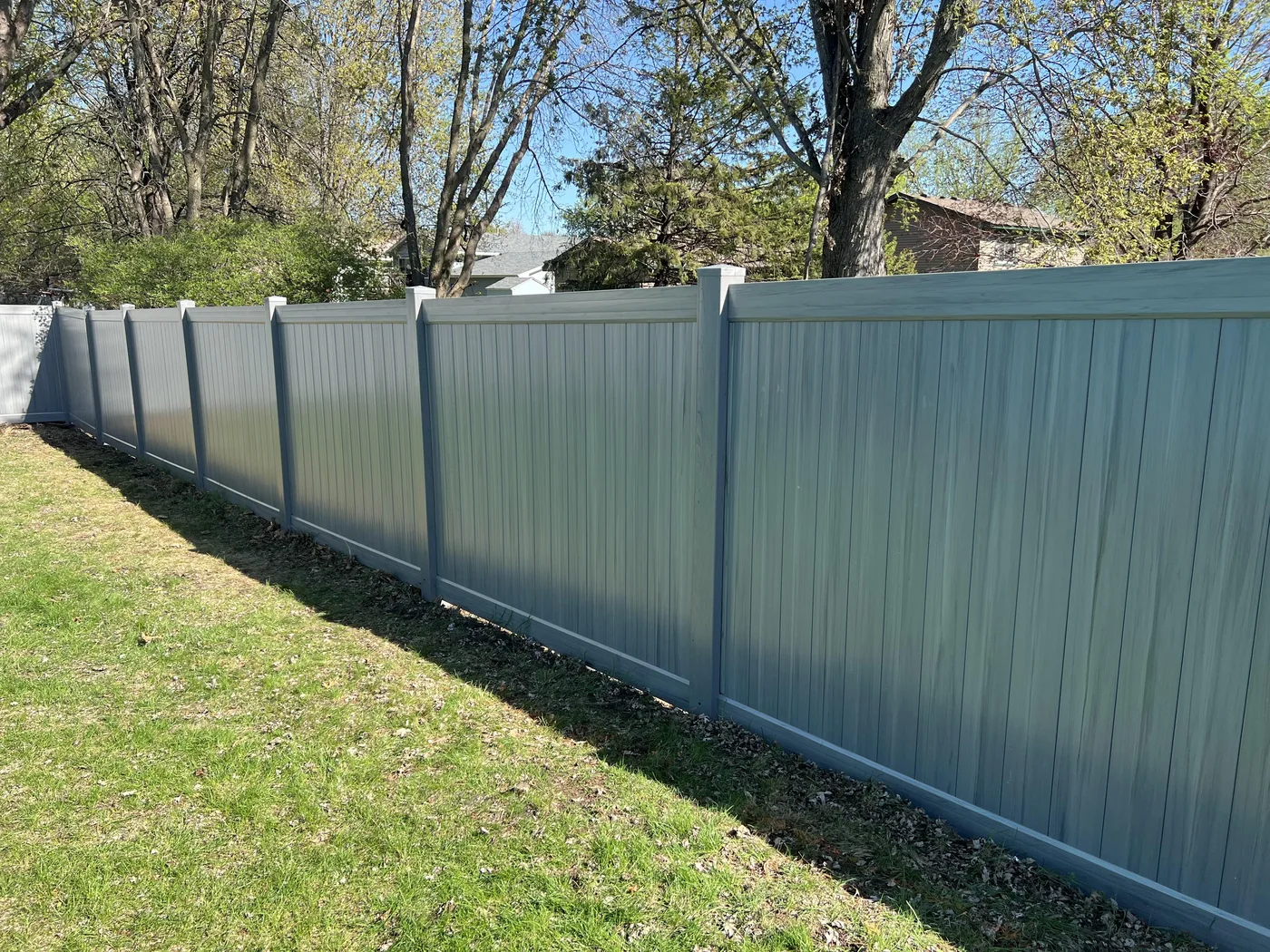
Compare vinyl as a complete system: panels, posts, caps, color and gate components. Full privacy is one direction, but picket, semi-private and decorative-top layouts create different levels of openness and different appearances from the street or patio.
Best starting point when you want to compare coordinated panel, color and gate options.
Identify the height, color and post details you want to repeat along the boundary. Include corners and gates so the proposal describes the complete finished line.
Lattice, spindle-top, scalloped-picket and rail designs change the balance between screening and openness. Compare the whole panel, not just the decorative accent.
Ask for the selected system and available components to be named in the estimate. That gives you a better basis for discussing cleaning, future replacement parts and any manufacturer information.
Color and component availability depend on the selected product. For a repair or extension, send any manufacturer details and close-up photos before assuming a new panel can match the existing fence. Review ground transitions and gate construction along with the panel appearance.
Styles to explore: Full privacy, semi-privacy, spindle top, lattice top, open or closed picket, scalloped picket and post-and-rail designs.
Real-photo vinyl examples from the shared design-reference library.
A practical enclosure, planned around access.
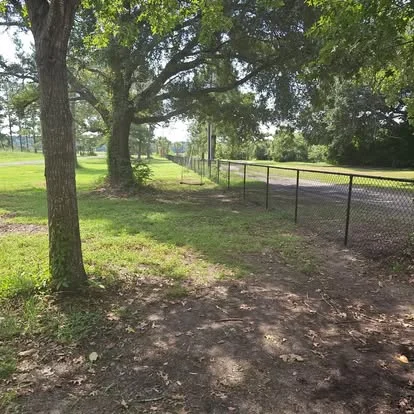
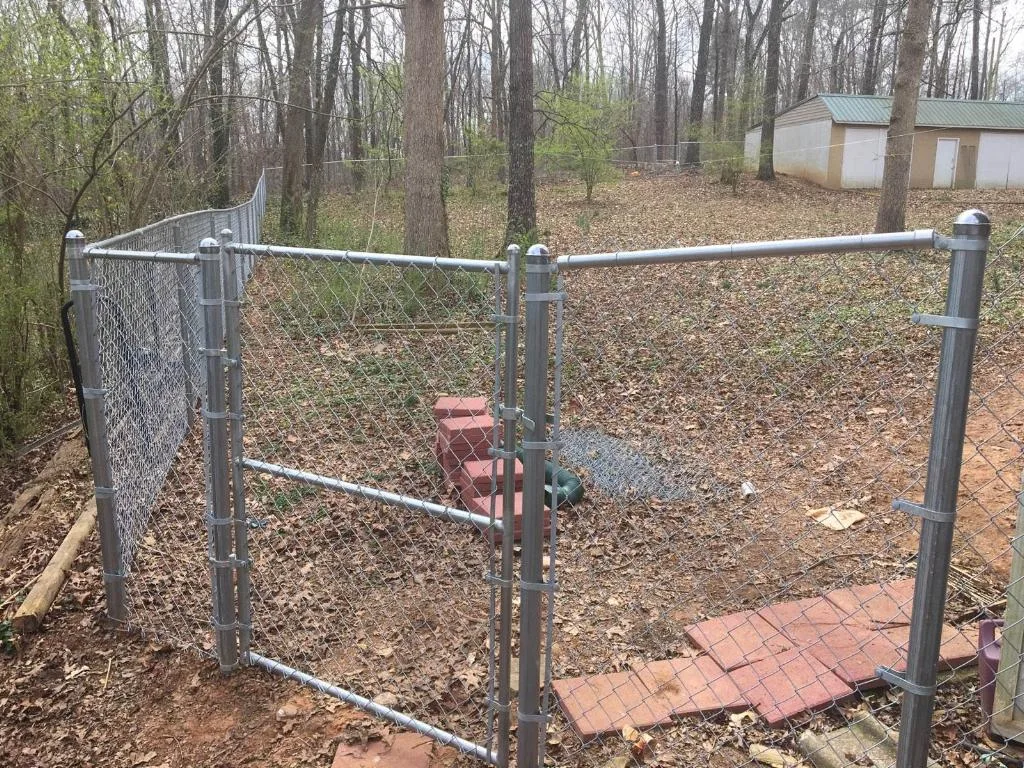
Start a chain-link project with what belongs inside the enclosure and what needs to pass through it. A dog yard, a longer boundary and a working access area call for different decisions about height, mesh, framework, ground clearance and gates.
Best starting point for a practical open enclosure where footprint and access drive the plan.
An open mesh enclosure serves a different purpose from a privacy fence. If visual screening matters, make that an explicit part of the request rather than assuming it comes with the fence.
Compare galvanized, black, green and brown finishes. Confirm which components are coated or finished so the posts, rails, fabric and gates work together visually.
Plan pedestrian and larger equipment gates separately. Measure what must pass through, how the gate swings and where it rests when open.
Ask for the mesh, framework, height, finish and gate scope to be identified in the proposal. Review changes in level and the gaps beneath the fence. If screening is requested, discuss the selected system and supporting construction instead of treating an added screen as a purely cosmetic choice.
Styles to explore: Galvanized, black-coated, green-coated and brown-coated finishes, with the openings and layout specified for your property.
Beaufort Fence boundary photography with a shared-library gate reference.
Side by side
| Fence type | Design direction | Style choices | Details to settle |
|---|---|---|---|
| Wood | Privacy, open pickets or custom detailing | Board arrangement, top profile, rails and trim | Lumber, finished faces, gates, stain or paint scope |
| Aluminum | An open-picket boundary | Rail count, top profile and lower-picket layout | Panel system, slope transitions, spacing and hardware |
| Vinyl | A coordinated privacy or open panel system | Solid, semi-private, decorative top, picket or rail | Product, color, matching components and gates |
| Chain link | A practical mesh enclosure | Galvanized or coated finishes | Fabric, framework, height, ground clearance and access |
Send the location, a photo of the yard and the result you want. We can talk through the material and layout options with you.
Before we get started
Start from the places you use: the patio, a window, a pool area or the dog’s part of the yard. Mark what you want to screen and what should remain visible. Compare solid wood or vinyl layouts with open-picket, rail and mesh designs around that purpose.
Yes, a mixed layout is worth discussing when different boundaries serve different purposes. Review the transitions, gate locations and any community requirements before choosing the combination. The proposed design should be confirmed for your property.
Tell us about size, behavior and any current escape points. Compare the actual picket or mesh openings, bottom clearance and gate latches, not just the material name. A layout that suits one dog may not suit another, and supervision still matters.
A photo can establish the look, but it does not establish that a design meets the requirements for your pool. The complete barrier, access points and selected gate hardware need review against the applicable requirements for the property.
Ask for the same length, height, number of gates, removal work and finishing scope in each comparison. Confirm the actual product or lumber and included components. A price alone does not tell you whether two estimates describe the same work.
Send a photo or use the style catalogs linked from each material section. Selecting “Ask About This Style” carries the name into the service-page estimate form, where you can edit it or add details before submitting.
Free estimates · Local & veteran owned
Tell us what you want to build or fix. Not sure which material or approach is right? Start with the result you want.
(843) 441-4402South Carolina projects within a 60-mile drive.
We come to your property for the work.